Liquid nitrogen is so cold that brief, careless contact can damage skin and eyes in moments. These injuries, usually called cold burns or cryogenic burns, are among the most common harms associated with liquid nitrogen, and almost all of them are preventable. This article explains how liquid nitrogen burns happen, how to prevent them, and the immediate safety principles to follow if someone is injured.
This is general safety information, not medical advice. Anyone with a cold burn or eye exposure should receive appropriate medical attention, and every site should have its own first-aid arrangements.
What Is a Cold Burn?
Liquid nitrogen boils at about −196 °C. When it, its cold vapour, or a surface it has cooled comes into contact with the body, heat is drawn rapidly out of the skin or eye tissue. This can damage the tissue in a way that resembles a heat burn, which is why the injury is called a cold or cryogenic burn.
The severity depends on how cold the source is, how long the contact lasts and which part of the body is affected. The eyes are especially vulnerable.
How Liquid Nitrogen Burns Happen
- Splashes during filling, pouring or transfer, particularly when liquid meets a warm vessel and boils vigorously.
- Contact with super-cooled surfaces, such as metal fittings, hoses, canisters, racks and items lifted out of a container.
- Cold vapour escaping from a container neck or transfer line onto exposed skin.
- Liquid trapped against the skin by gloves, sleeves, watches, rings or footwear, which prolongs contact.
- Lowering warm items into liquid nitrogen too quickly, causing violent boiling and splashing.
A common misconception is that brief contact is harmless. Small droplets may roll off skin, but sustained contact, trapped liquid and cold metal surfaces can cause injury quickly.
Prevention: The Most Important Part
Wear the Right PPE
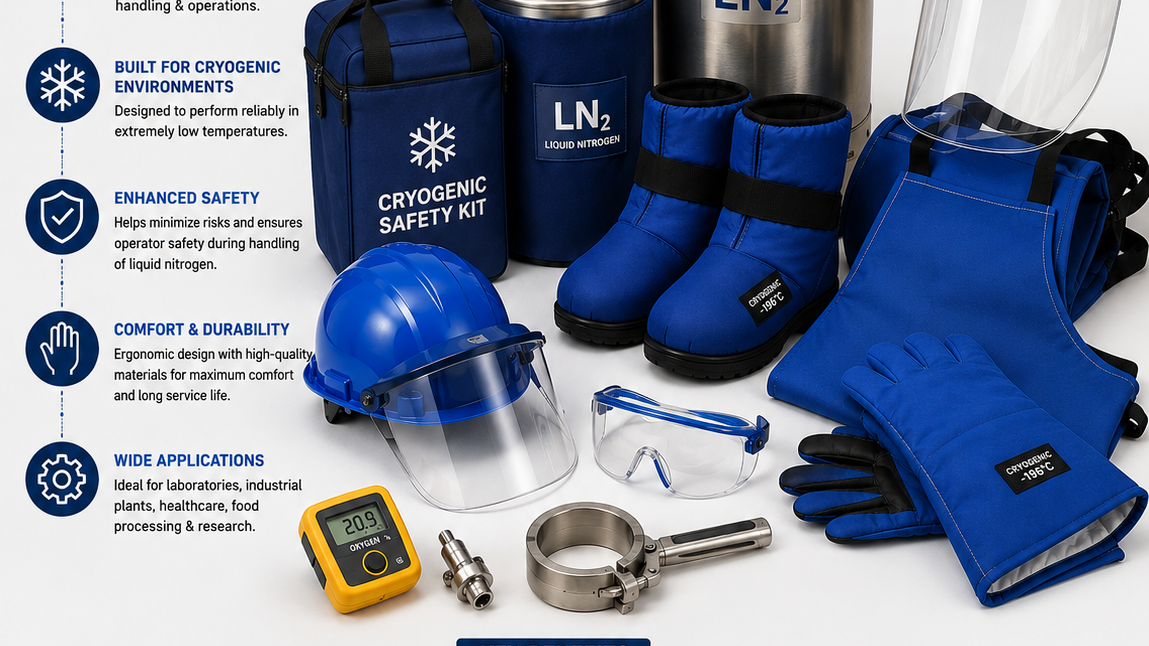
- A face shield worn over safety goggles for filling, pouring and transfer.
- Insulated cryogenic gloves, loose enough to remove quickly if liquid gets inside.
- A cryogenic apron and full-length clothing.
- Closed shoes, with trousers worn outside the footwear.
Our guide What PPE Is Needed When Handling Liquid Nitrogen? covers PPE by task.
Remove Items That Can Trap Liquid
Take off rings, watches and bracelets before handling liquid nitrogen. Avoid clothing with pockets or turn-ups that could collect liquid.
Use Tools, Not Hands
Use tongs or suitable tools to lift items in and out of liquid nitrogen. Cryogenic gloves are designed for brief contact and cold handling, not immersion.
Control the Task
- Fill and pour slowly, especially at the start.
- Keep your face away from container openings.
- Use equipment designed for cryogenic liquids.
- Keep the work area clear and stable.
See Safe Filling and Transfer of Liquid Nitrogen for the general principles.
Train Everyone Who Handles Liquid Nitrogen
Occasional users, students and new staff are often most at risk. Make sure everyone understands the hazards, the PPE and what to do if an injury occurs.
Who Is Most at Risk?
Cold burns can happen to anyone who handles liquid nitrogen, but risk is often higher for:
- Occasional users, who may be less familiar with the hazards or the PPE.
- New staff and students, before they have been trained and supervised.
- People in a hurry, for example topping up a container quickly between other tasks.
- People handling small items, who may remove gloves to improve grip.
- Anyone working alone, where help may not be immediately available.
Prevention plans should pay particular attention to these groups and situations.
Recognising a Possible Cold Burn
A cold burn may not feel painful at first, because cold can numb the area. The skin may look pale, waxy, red or blistered, depending on the injury. Any contact that leaves skin looking or feeling abnormal should be treated as a possible cold burn and assessed.
Immediate Safety Principles if Someone Is Injured
- Make the area safe: stop the task and move the person away from the source of liquid nitrogen, without putting yourself at risk.
- Check the environment: if the area may be oxygen-depleted, for example after a large spill in an enclosed room, do not enter. Raise the alarm.
- Raise the alarm and call for help: follow your site’s emergency and first-aid procedure.
- Do not rub the affected area and do not apply direct heat.
- Do not pull off clothing or gloves that are frozen to the skin.
- Seek medical attention promptly for any cold burn, however minor it appears.
- Eye exposure is a medical emergency. Follow your site’s eye-wash procedure and get urgent medical help.
Your workplace first-aid arrangements should cover cold burns specifically, and first-aiders should be familiar with them before an incident occurs.
After an Incident
- Record what happened and how the injury occurred.
- Check PPE and equipment involved for damage.
- Review the task, the PPE and the training to prevent a repeat.
Frequently Asked Questions
Can liquid nitrogen burn you?
Yes. Contact with liquid nitrogen, its cold vapour or super-cooled surfaces can cause cold burns to skin and eyes.
Why don’t small splashes always cause injury?
Very brief contact with tiny droplets may not cause injury, but trapped liquid, longer contact and cold metal surfaces can cause burns quickly. Never rely on this.
What should I do first if someone has a cold burn?
Move them away from the source safely, raise the alarm, follow your site’s first-aid procedure and seek medical attention. Do not rub the area or apply direct heat.
How can cold burns be prevented?
With suitable cryogenic PPE, using tools instead of hands, careful filling and transfer, removing jewellery, and training everyone who handles liquid nitrogen.
Cryogenic Safety Equipment from Spectra
Spectra Cryogenic Systems Pvt. Ltd. supplies cryogenic safety equipment, including cryogenic gloves, face shields, safety goggles, aprons, protective clothing, other cryogenic PPE and safety accessories. To discuss protection for your team, call +91 98290 89936 or email spectracryo@yahoo.com.