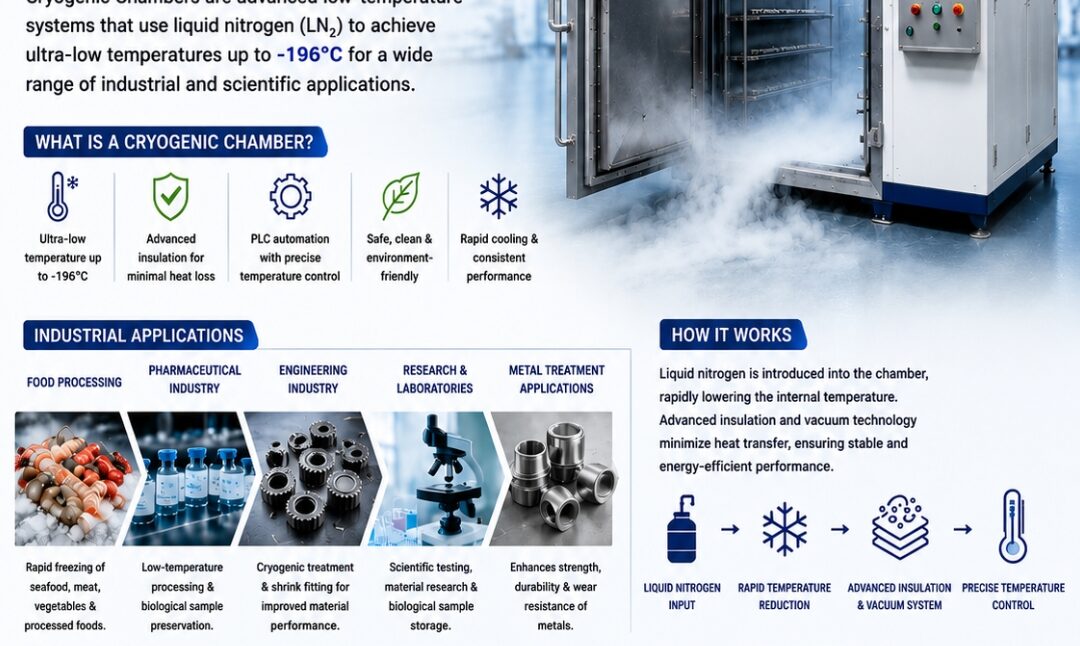
Cryogenic Chambers are advanced low-temperature systems designed for industrial freezing, cryogenic processing, metal treatment, pharmaceutical applications, and scientific research. These chambers use liquid nitrogen technology to achieve extremely low temperatures required for specialized industrial operations. With increasing demand for efficient low-temperature processing, cryogenic chambers are now widely used across food…
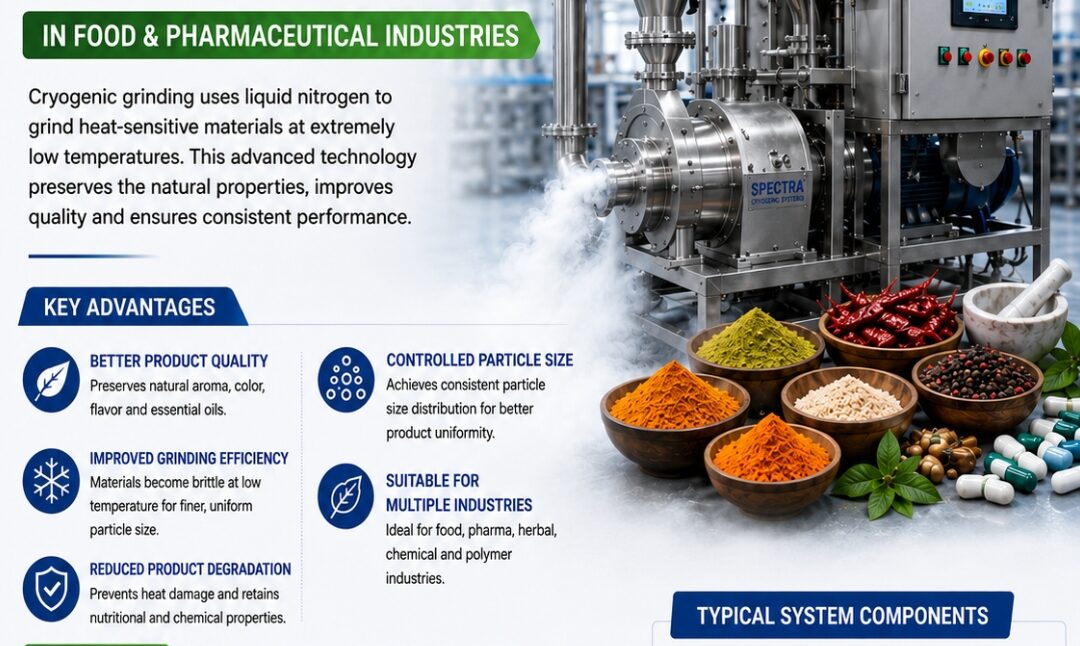
Cryogenic Grinding Systems have transformed the processing of heat-sensitive materials in food processing, pharmaceutical, herbal, and chemical industries. Unlike conventional grinding methods, cryogenic grinding uses liquid nitrogen to maintain extremely low temperatures during the grinding process. This advanced technology helps preserve product quality, aroma, essential oils, and material characteristics while…
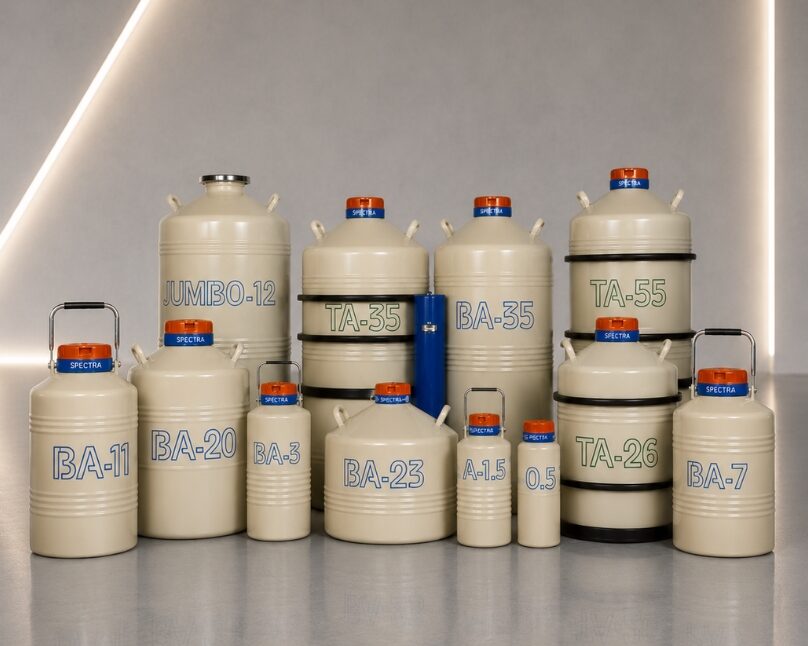
Introduction Liquid Nitrogen Containers play a critical role in modern animal husbandry and artificial insemination programs. These cryogenic storage systems are designed to maintain extremely low temperatures required for preserving frozen semen doses and biological materials safely for long periods. With the increasing demand for improved livestock breeding and dairy…
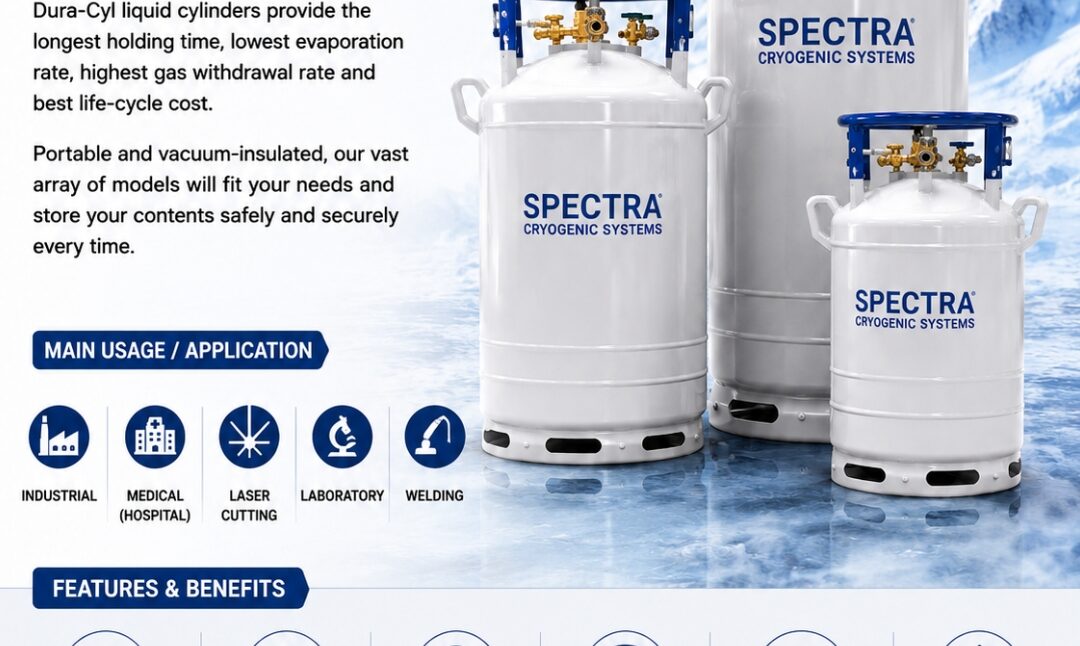
Spectra Cryogenic Systems Pvt. Ltd., established in 2006 in Kota, Rajasthan, supplies liquid nitrogen and other liquid gases, liquid nitrogen containers and cryogenic equipment, and provides cryogenic tank repair, installation and AMC services.