A liquid nitrogen container only protects what is stored inside it while there is enough liquid nitrogen in it. Let the level fall too far and samples, semen straws or other stored material can warm up, sometimes without anyone noticing until it is too late. Regular liquid nitrogen level monitoring is one of the simplest and most effective habits a lab, clinic or breeding centre can build. This guide explains why levels fall, how to check them, and how to turn checks into a routine that prevents losses.
Why the Level Falls
Liquid nitrogen boils at about −196 °C, so it is always slowly evaporating, even inside a well-insulated container. The vacuum insulation between the inner and outer walls slows this down, which is why each container has a holding time, but it never stops it completely. The level falls faster when:
- the container is opened often, or the lid is left off;
- the container is moved, knocked or tilted;
- it stands in a warm place or in direct sunlight;
- the vacuum insulation has been damaged.
Our guide How Long Does Liquid Nitrogen Last in a Storage Container? explains holding time in more detail.
Ways to Check the Level
Dipstick or Measuring Rod
The most common method for open-neck containers is a simple measuring rod or dipstick. It is lowered to the bottom of the container, held briefly, then removed. Frost forms on the part that was in the liquid, showing the depth. It is cheap and reliable when done consistently.
- Use a rod made for cryogenic use, never a hollow tube that liquid can spurt out of.
- Wear cryogenic gloves and eye protection.
- Insert and remove the rod slowly, and keep your face away from the neck.
Weighing the Container
Weighing gives an indirect measure of how much liquid nitrogen remains. Once you know the empty weight and the full weight, the difference tells you how full the container is. This avoids opening the container but needs a suitable scale and a consistent method.
Level Gauges and Monitoring Devices
Some vessels and storage systems use built-in gauges or electronic level monitoring with alarms. These are useful for valuable or irreplaceable material, or where containers are left unattended for long periods. Ask your supplier what monitoring options suit your container and application.
Build a Monitoring Routine
Checks only protect samples if they happen reliably. A simple routine works for most sites:
- Set a frequency. Decide how often each container is checked, based on its holding time and how often it is used.
- Name a person and a back-up. Make one person responsible, with someone else covering leave and holidays.
- Record every reading. Note the date, the level and who checked it, in a logbook or spreadsheet.
- Set a refill level. Agree the level at which a container must be topped up, leaving a safe margin rather than waiting until it is nearly empty.
- Plan around closures. Top up containers before weekends, holidays and shutdowns.
What the Records Tell You
A level log is more than a reminder to refill. Over time it shows how quickly each container normally uses liquid nitrogen. If a container suddenly starts losing liquid faster than usual, that is an early warning sign that something may be wrong with it.
Other warning signs include:
- frost or condensation on the outer body;
- the outer body feeling unusually cold;
- visible damage, dents or a damaged neck.
These can point to a problem with the vacuum insulation. Our guide LN2 Container Maintenance and Preventive Care covers what to look for. Spectra Cryogenic Systems also offers liquid nitrogen container repair for all brands, including vacuum-related repair.
Refilling Safely
Monitoring and refilling go together. When topping up:
- work in a well-ventilated area;
- wear cryogenic gloves and a face shield over safety goggles;
- fill slowly to limit splashing and boiling;
- never seal the container afterwards: always replace the correct loose-fitting lid.
For more detail, read Safe Filling and Transfer of Liquid Nitrogen.
Common Monitoring Mistakes
- Checking only when someone remembers, rather than on a schedule.
- Not recording readings, so slow changes go unnoticed.
- Waiting until a container is almost empty before ordering liquid nitrogen.
- Leaving the lid off for long periods while working with samples.
- Ignoring frost on the outer body.
Frequently Asked Questions
How often should I check the liquid nitrogen level?
It depends on the container’s holding time and how it is used. Containers that are opened often, or that hold irreplaceable material, should be checked more frequently. Set a regular schedule and record every reading.
What is the safest way to measure the level?
A purpose-made measuring rod used with cryogenic gloves and eye protection is the most common method. Weighing the container avoids opening it.
My container is using liquid nitrogen faster than before. What should I do?
Faster loss can indicate damage to the vacuum insulation. Have the container inspected, and move valuable material to another container if needed.
How long do Spectra containers hold liquid nitrogen?
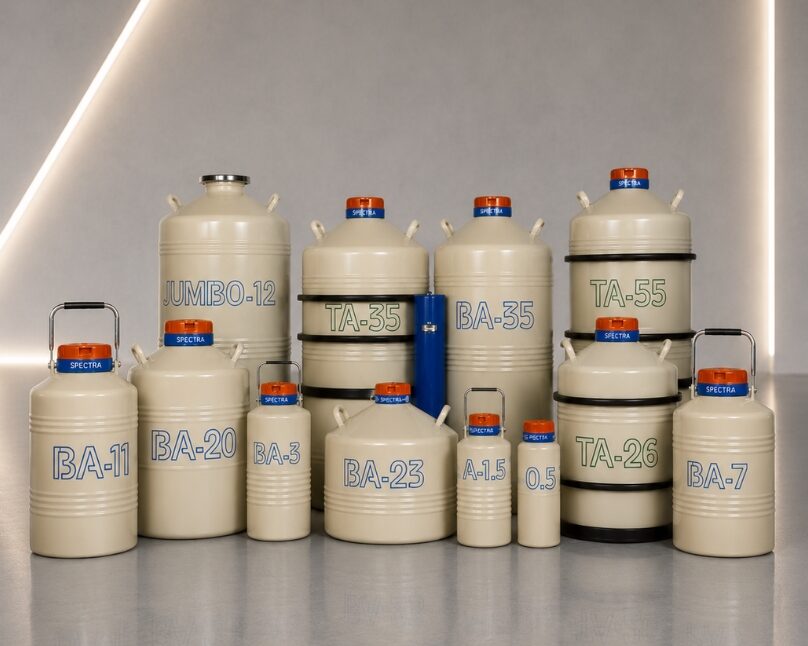
Spectra’s liquid nitrogen containers range from 1 L to 51 L, with holding times typically between 15 and 60 days, depending on the model.
Need Containers or a Reliable LN2 Supply?
Spectra Cryogenic Systems Pvt. Ltd., Kota, Rajasthan, supplies liquid nitrogen containers, liquid nitrogen and container repair. Call +91 98290 89936 or email spectracryo@yahoo.com.