A liquid nitrogen container has no motor, no filters and very few moving parts, so it is easy to assume it needs no attention. In practice, how a container is handled, stored and checked has a direct effect on how well it holds liquid nitrogen and how long it stays in service. This guide covers practical liquid nitrogen container maintenance: routine checks, good handling, the right storage environment, the signs that need technical attention, and the difference between everyday care and professional repair.
How a Liquid Nitrogen Container Works
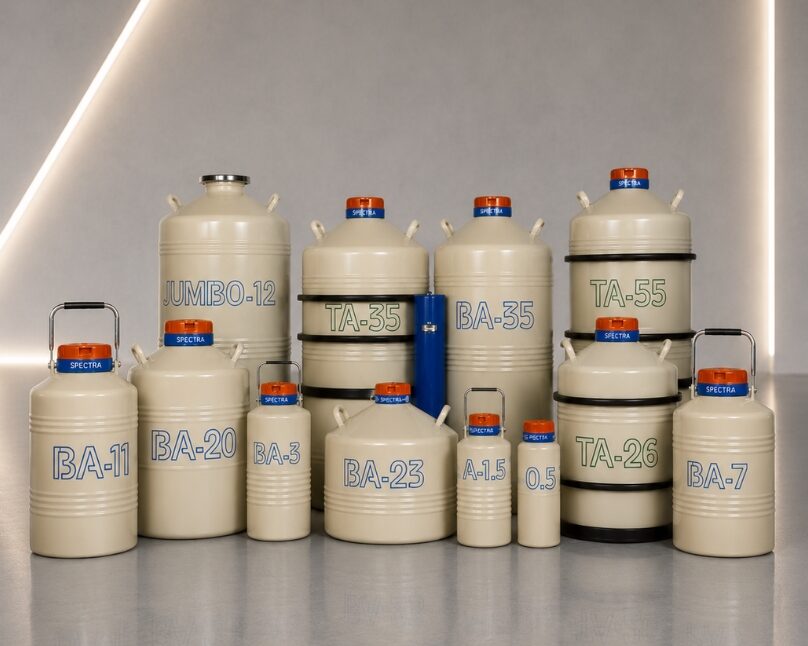
A liquid nitrogen container, also called a cryocan or dewar, has an inner vessel and an outer body separated by a vacuum space. The vacuum greatly reduces the heat reaching the liquid nitrogen, which is why the liquid evaporates slowly. Most of the container’s performance depends on that vacuum staying intact, which is why careful handling matters so much.
Routine Care vs Repair
| Routine care (by the user) | Repair (by a specialist) |
|---|---|
| Visual checks of the outer body, neck and lid | Assessment of a container that is performing poorly or damaged |
| Careful handling and transport | Vacuum-related repair work |
| Keeping the storage area suitable | Repair of physical damage |
| Recording liquid nitrogen levels and refills | Inspection and testing after repair |
| Keeping the lid, neck and accessories clean and dry | Advice on whether repair or replacement makes sense |
Routine care aims to prevent problems and spot them early. Repair deals with problems that routine care cannot fix, particularly anything involving the vacuum.
Routine Visual Inspection
Make visual checks part of normal use, for example when refilling or accessing samples. Look for:
- Outer body: dents, cracks, corrosion or other damage.
- Frost, condensation or “sweating” on the outer surface, which a healthy container should not show in normal use.
- Neck area: damage, wear or build-up of ice.
- Lid: the correct loose-fitting lid is present and undamaged.
- Accessories: canisters, racks and handles in good condition.
Record anything unusual so changes over time are easy to see.
Handling
- Keep containers upright. Tipping or laying a container down can spill liquid and put stress on the internal structure.
- Avoid knocks and drops. Impact is one of the most common causes of damage that affects the vacuum.
- Do not drag containers. Lift them, or use a suitable trolley for larger sizes.
- Handle the neck and lid gently when filling or accessing samples.
- Secure containers during transport so they cannot slide or fall.
- Use the correct lid only. Never seal a container: evaporating gas must be able to escape.
- Wear suitable cryogenic PPE, such as cryogenic gloves and face protection, when filling or handling.
Storage Environment
- Store containers in a dry, well-ventilated area, away from direct sunlight and heat sources.
- Place them on a level, stable floor where they cannot be knocked over.
- Avoid damp floors and locations where corrosive substances are used.
- Keep the area free of clutter so containers can be accessed safely.
- Do not store containers in small, enclosed rooms where nitrogen gas can build up.
Watch the Liquid Nitrogen Level
The single most useful indicator of a container’s condition is how quickly it uses liquid nitrogen. Record levels and refill dates, and compare them over time. A container that suddenly needs refilling more often, without any change in how it is used, may have a problem with its vacuum. Our guide How Long Does Liquid Nitrogen Last in a Storage Container? explains holding time and what affects it.
Signs That Need Technical Attention
- Liquid nitrogen running out noticeably faster than before.
- Frost, condensation or a cold outer body during normal use.
- Visible damage after a drop, knock or fall.
- Damage to the neck area.
- Any doubt about whether the container is keeping stored material safe.
If you see any of these, move critical samples to a container in good condition if needed, and have the container inspected.
Vacuum-Related Issues
The vacuum space cannot be inspected or restored by the user. If the vacuum is lost or reduced, more heat reaches the liquid nitrogen, so it evaporates faster and the outer body may become cold or frosted. This kind of problem needs specialist assessment and, where practical, vacuum-related repair. Attempting to open or modify a container yourself is not safe and can make the problem worse.
When to Seek Professional Repair
Contact a repair specialist when a container shows any of the signs above, when it has been physically damaged, or when its performance has clearly changed. Spectra Cryogenic Systems provides liquid nitrogen container and cryogenic tank repair for equipment of all brands, including vacuum-related repair, with inspection and testing after repair. Repairs are carried out at our workshop or at your location in Rajasthan, Haryana, Punjab, Uttar Pradesh and Madhya Pradesh.
For more on what the repair process involves, see Cryogenic Tank and Liquid Nitrogen Container Repair: What It Involves.
Frequently Asked Questions
Do liquid nitrogen containers need maintenance?
They need regular care: visual checks, careful handling, a suitable storage environment and monitoring of liquid nitrogen levels. Problems with the vacuum need professional repair.
Why is my container frosting on the outside?
Frost or condensation on the outer body during normal use can indicate a problem with the vacuum insulation. Have the container inspected.
Can I repair the vacuum myself?
No. Vacuum-related problems need specialist assessment and repair.
Does Spectra repair containers from other brands?
Yes. Spectra Cryogenic Systems repairs liquid nitrogen containers and cryogenic tanks of all brands, including third-party equipment.
Need a Container Checked?
If a container is losing liquid nitrogen faster than usual or has been damaged, contact Spectra Cryogenic Systems Pvt. Ltd. on +91 98290 89936 or at spectracryo@yahoo.com. To replace a container, see our range of liquid nitrogen containers.