If you store samples in liquid nitrogen, one question matters more than almost any other: how long will the liquid nitrogen last before the container needs refilling? Run out, and everything stored inside starts to warm. This guide explains how long liquid nitrogen lasts in a storage container, what affects it, and how to plan refills so you are never caught short.
The Short Answer
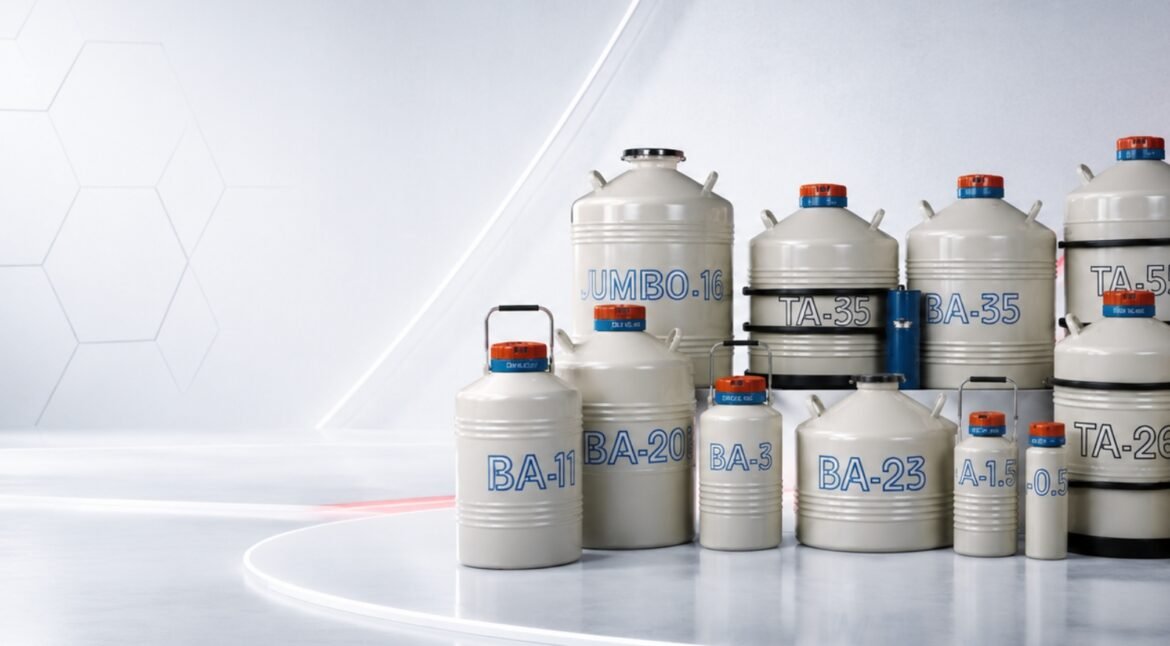
It depends on the container. Every liquid nitrogen container has a holding time: the period it can keep liquid nitrogen before it needs to be refilled. Across Spectra’s range of liquid nitrogen containers, holding times are typically 15 to 60 days, depending on the model.
How long the liquid lasts in your own container will also depend on how you use it. A container that is opened many times a day will need refilling sooner than one that is rarely disturbed.
Why Liquid Nitrogen Doesn’t Last Forever
Liquid nitrogen boils at about −196 °C. At room temperature it is always slowly evaporating, and the nitrogen gas escapes through the container’s neck. A storage container does not stop this process; it slows it down.
It does this with vacuum insulation: the space between the inner vessel and the outer body is under vacuum, which greatly reduces the heat that reaches the liquid. The better the insulation and the less heat that gets in, the slower the liquid evaporates and the longer it lasts.
Containers are deliberately not sealed. Evaporating gas must be able to escape; a sealed container could build up dangerous pressure.
Holding Time vs Real-World Use
Holding time figures describe how long a container keeps liquid nitrogen under defined conditions. In daily use, the actual time between refills is often shorter, because every time the lid is lifted, samples are handled or the container is moved, extra heat enters and more liquid evaporates.
A useful way to think about it:
- Undisturbed storage: the container is filled and left alone. Time between refills is closest to its rated holding time.
- Working use: the container is opened regularly to add or remove samples. Time between refills is shorter, depending on how often and how long it is opened.
What Affects How Long Liquid Nitrogen Lasts
1. The Container’s Design and Size
Capacity, neck size and insulation all play a part. Spectra’s containers range from 1 L to 51 L. Larger containers hold more liquid, but holding time depends on the specific model as well as its size.
2. How Often the Container Is Opened
Each opening lets heat and moist air in. Keep openings short, plan sample access in advance and replace the lid promptly.
3. Handling and Transport
Tilting, knocking or moving a container can cause the liquid to slosh and evaporate faster. Keep containers upright and handle them gently.
4. Where the Container Is Kept
Warm rooms, direct sunlight and nearby heat sources increase evaporation. Store containers in a cool, dry, well-ventilated area.
5. How Full the Container Is
Refill before the level gets low. Letting a container run almost empty puts stored samples at risk.
6. The Condition of the Vacuum
Over time, or after physical damage, a container’s vacuum insulation can deteriorate. When this happens, liquid nitrogen evaporates much faster than before and the outer body may become cold, damp or frosted. That is a sign the container should be inspected. Spectra provides liquid nitrogen container repair, including vacuum-related repair work.
How to Plan Your Refills
- Know your container’s holding time and treat it as a maximum, not a target.
- Check the liquid level regularly using a method suitable for your container, and record it.
- Track how quickly the level falls in your normal pattern of use. After a few weeks, you will know your real refill interval.
- Set a refill point well before the level becomes low, leaving a margin for holidays, delays and unexpected use.
- Arrange a reliable supply of liquid nitrogen that matches your refill schedule. Some sites keep a larger on-site reservoir for refilling; see our comparison of a liquid nitrogen container vs a liquid cylinder.
- Investigate sudden changes. If the level starts falling much faster without a change in use, have the container checked.
Signs Your Liquid Nitrogen Is Running Out Too Fast
- Refills are needed noticeably more often than before.
- The outer body of the container feels cold or shows frost or condensation.
- The container has been dropped, knocked or damaged.
If you notice any of these, move critical samples to a sound container if needed and have the container inspected.
Frequently Asked Questions
How long does liquid nitrogen last in a Spectra container?
Holding times across Spectra’s range of liquid nitrogen containers are typically 15 to 60 days, depending on the model. Actual time between refills depends on how the container is used.
Does a bigger container always last longer?
Not always. Larger containers hold more liquid, but holding time depends on the specific model’s design as well as its capacity.
Can I seal a container to stop evaporation?
No. Liquid nitrogen containers must never be sealed. Evaporating gas must be able to escape, or pressure will build up.
Why is my container using liquid nitrogen faster than before?
More frequent opening, warmer storage or rough handling can all increase evaporation. If none of these has changed, the container’s vacuum insulation may need inspection.
Need a Container or a Refill Plan?
To discuss liquid nitrogen containers, holding time for your application or a container that is losing liquid too quickly, contact Spectra Cryogenic Systems Pvt. Ltd., Kota, Rajasthan, on +91 98290 89936 or at spectracryo@yahoo.com.