A cryogenic chamber is a significant investment, and the right choice depends far more on your process than on a brochure feature list. Buyers who start with a clear picture of what they need to cool, how cold, how often and under what conditions end up with a chamber that fits their work. This guide explains how to evaluate and choose a cryogenic chamber for temperatures from 0 °C down to −196 °C, and what to discuss with a supplier before you buy.
If you are still exploring where cryogenic chambers are used, our earlier article Understanding Cryogenic Chambers and Their Industrial Applications covers the main applications. This article focuses on the buying decision.
What a Cryogenic Chamber Does
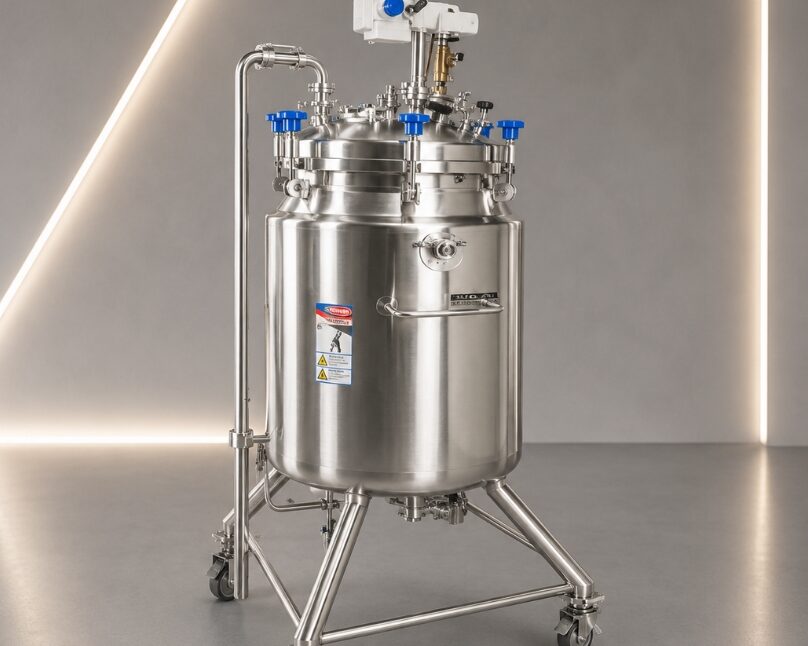
A cryogenic chamber is an enclosed, insulated space in which products or components are cooled using a cryogen, most commonly liquid nitrogen. Liquid nitrogen boils at about −196 °C, so a chamber cooled with it can reach very low temperatures. Spectra’s cryogenic chambers operate across a temperature range of 0 °C to −196 °C, depending on application requirements.
Step 1: Define Your Process
Before comparing chambers, write down what the chamber must do:
- What will be cooled? Food products, pharmaceutical materials, mechanical components for shrink fitting, metal parts for treatment, laboratory samples or something else.
- Why is it being cooled? Freezing, holding at a set temperature, contracting a part for assembly, or another process step.
- What result do you need? The quality, consistency or dimensional outcome that defines success for your process.
A clear process definition makes every later decision easier and helps the supplier recommend a suitable configuration.
Step 2: Work Out the Temperature You Actually Need
The 0 °C to −196 °C range covers very different requirements. Ask:
- What temperature does the product or component need to reach?
- Does it need to be held at that temperature, and for how long?
- How quickly does it need to cool, and does the rate of cooling matter for your product?
- Does the temperature need to be the same throughout the load?
Define these from your process requirements, then discuss with the supplier how the chamber will achieve and control them.
Step 3: Size the Chamber to Your Load
- What are the dimensions and weight of the largest items to be cooled?
- How many items, or how much product, will be processed in one cycle?
- How many cycles are needed per shift or per day?
- How will items be loaded and unloaded: by hand, on trays, racks or trolleys, or with lifting equipment?
A chamber that is too small limits throughput; one that is much larger than needed can use more liquid nitrogen than necessary.
Step 4: Plan the Liquid Nitrogen Supply
A cryogenic chamber depends on a reliable liquid nitrogen supply. Consider:
- how much liquid nitrogen the process is likely to use, which the supplier should help estimate for your load and cycle;
- whether supply will come from liquid cylinders or a bulk storage tank;
- where the supply vessel will sit and how it will connect to the chamber;
- how deliveries will be scheduled so production is not interrupted.
Spectra Cryogenic Systems also supplies liquid nitrogen, including bulk tanker supply across India.
Step 5: Control and Monitoring
Ask the supplier how the chamber’s temperature is controlled and monitored, and what information operators will see. Consider whether you need to record temperatures for quality purposes, and how alarms or warnings would be raised. Agree these requirements before the configuration is finalised.
Step 6: Site, Safety and Ventilation
Liquid nitrogen chambers release nitrogen gas, which can reduce oxygen levels in enclosed spaces. Plan:
- where the chamber will be installed, and the floor space and access needed;
- how nitrogen gas will be vented safely;
- whether oxygen monitoring is appropriate for the room;
- the PPE operators will need when loading and unloading cold items.
Our guide Oxygen Depletion Risk When Using LN2 Indoors explains why ventilation matters.
Step 7: Installation, Training and Support
- What is needed to install and start up the chamber at your site?
- What training will operators receive?
- How will technical support be provided after installation?
- What routine checks and maintenance will the chamber need?
Common Mistakes When Buying a Cryogenic Chamber
- Specifying the lowest possible temperature without checking what the process actually needs.
- Sizing for today only, without considering growth in throughput.
- Leaving liquid nitrogen supply until last, when it affects layout, deliveries and running cost.
- Overlooking ventilation in the room where the chamber will be installed.
- Not agreeing control and recording requirements before the configuration is fixed.
- Underestimating loading and unloading, including the PPE and handling equipment needed for cold items.
A Buyer’s Checklist
- Process and product to be cooled
- Target temperature, holding time and cooling-rate needs
- Load size, weight and cycles per day
- Loading method
- Liquid nitrogen supply and storage arrangement
- Control, monitoring and recording needs
- Installation space, ventilation and safety
- Training and support expectations
Frequently Asked Questions
What temperature range do Spectra’s cryogenic chambers cover?
Spectra’s cryogenic chambers operate across a temperature range of 0 °C to −196 °C, depending on application requirements.
How do I choose the right size of chamber?
Start from the size and weight of the largest items, the quantity per cycle and the number of cycles needed, then discuss loading methods with the supplier.
Does a cryogenic chamber need its own liquid nitrogen supply?
Yes. Plan a reliable supply from liquid cylinders or a bulk storage tank. Spectra Cryogenic Systems also supplies liquid nitrogen.
What safety measures does a cryogenic chamber need?
Good ventilation, safe venting of nitrogen gas, consideration of oxygen monitoring, trained operators and suitable cryogenic PPE.
Discuss Your Cryogenic Chamber Requirement
To discuss a cryogenic chamber for your process, contact Spectra Cryogenic Systems Pvt. Ltd., Kota, Rajasthan, on +91 98290 89936 or at spectracryo@yahoo.com. Share what you need to cool, the temperature you need and your expected throughput.