Most people know that liquid nitrogen is extremely cold and can cause cold burns. Fewer realise that its most serious hazard indoors is invisible. As liquid nitrogen evaporates, it can lower the amount of oxygen in a room, and people may not notice until they are affected. This article explains the liquid nitrogen oxygen depletion risk, why ventilation and monitoring matter, and what to consider when planning to use liquid nitrogen indoors.
This is general safety information. Your own risk assessment, local regulations and qualified safety advice should always guide decisions for your site.
Why Liquid Nitrogen Can Create an Oxygen-Deficient Atmosphere
Liquid nitrogen boils at about −196 °C, so at room temperature it is always evaporating. When it turns into gas, it expands to roughly 700 times its liquid volume. A small amount of liquid therefore produces a large volume of nitrogen gas.
In an open or well-ventilated space, that gas mixes with the air and disperses. In a small, closed or poorly ventilated room, it can build up and displace the air, reducing the proportion of oxygen people breathe.
Several things make this hazard easy to underestimate:
- Nitrogen has no colour or smell. People cannot see or smell that the oxygen level has dropped.
- The white fog is not the nitrogen. The visible cloud around liquid nitrogen is condensed moisture from the air. The nitrogen gas itself is invisible and can spread beyond the fog.
- Cold nitrogen gas is denser than room air. Freshly evaporated, cold gas can collect in low areas such as pits, basements and floor-level spaces.
- The effects can come on without warning. Breathing oxygen-deficient air can impair judgement and coordination, and at lower oxygen levels can cause sudden collapse. A person may not recognise the danger in time to leave.
Situations That Increase the Risk
- Storing or filling liquid nitrogen vessels in small rooms, cupboards or store rooms.
- Using liquid nitrogen in basements, pits, cold rooms or other enclosed spaces.
- Decanting or filling larger quantities indoors.
- A spill, or a vessel or transfer line releasing more gas than usual.
- Ventilation that is switched off, blocked or not designed for cryogenic use.
- Transporting liquid nitrogen in the closed cabin of a vehicle or in a lift with people.
Why Ventilation Matters
Ventilation is the primary control for oxygen depletion. Good ventilation dilutes and removes nitrogen gas before it can build up. When planning indoor use, consider:
- the size of the room compared with the quantity of liquid nitrogen stored and used;
- whether ventilation is natural or mechanical, and whether it runs whenever liquid nitrogen is present;
- whether air is extracted at low level, where cold gas can collect;
- whether ventilation openings and extract systems are kept clear;
- whether the room is used for other purposes that could block or switch off ventilation.
Why Oxygen Monitoring May Be Relevant
Because people cannot detect oxygen depletion themselves, an oxygen monitor with audible and visual alarms is often considered for indoor areas where liquid nitrogen is stored or used in significant quantities. A monitor gives an early warning so people can leave the area.
Whether a monitor is needed, how many sensors are required and where they should be placed depend on the room, the quantities involved and the ventilation. This should be decided as part of a risk assessment, following the guidance of the monitor’s supplier and any applicable regulations. Monitors also need to be tested and maintained so they work when needed.
Safe Handling Principles
- Use and store liquid nitrogen only in well-ventilated areas.
- Keep quantities indoors to what is needed.
- Never seal liquid nitrogen in a container that is not designed for it; evaporating gas must be able to escape.
- Avoid lone working with liquid nitrogen in enclosed areas where possible.
- Keep doors and escape routes clear.
- Do not travel with liquid nitrogen in a closed vehicle cabin or a lift with passengers.
- Make sure everyone who works with liquid nitrogen understands the oxygen depletion hazard.
What PPE Can and Cannot Do
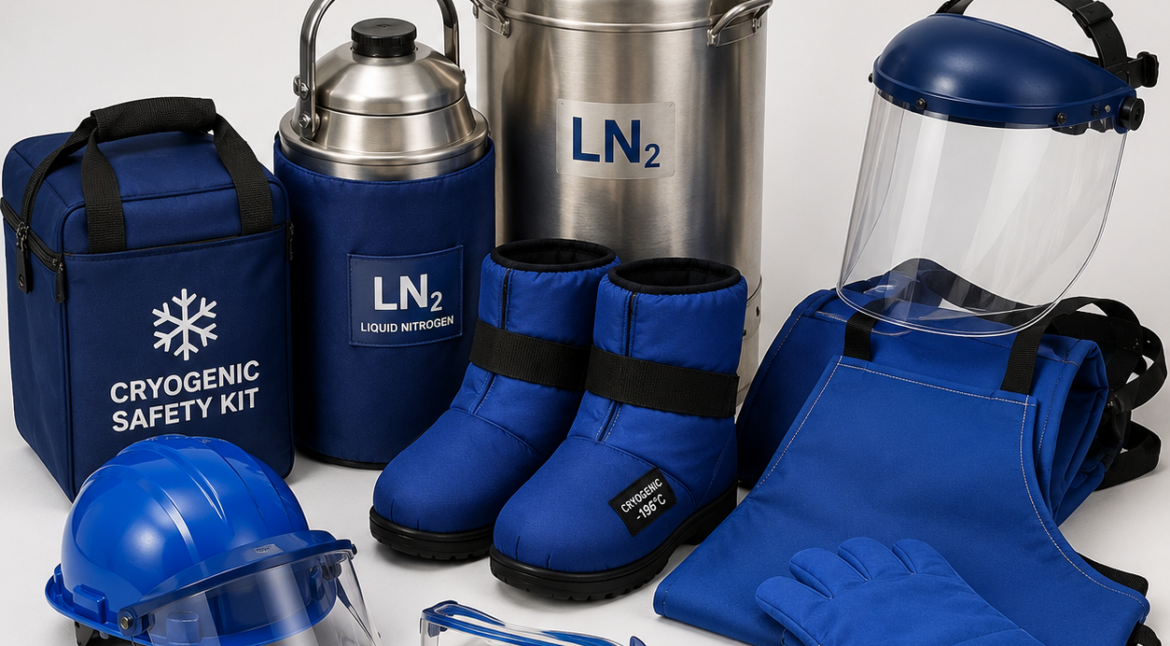
Cryogenic PPE, such as cryogenic gloves, face shields, safety goggles and aprons, protects against cold burns from splashes and cold surfaces. It does not protect against oxygen depletion. Ventilation, monitoring and safe working practices are what manage that hazard. For guidance on PPE for cold hazards, see What PPE Is Needed When Handling Liquid Nitrogen?
If Oxygen Depletion Is Suspected
- Leave the area immediately and raise the alarm.
- Do not re-enter until the area has been made safe.
- Do not enter to rescue someone unless you are trained and equipped to do so and it is safe; untrained rescuers can become casualties themselves.
- Call for emergency help and follow your site’s emergency procedure.
Planning Indoor Liquid Nitrogen Use
Before introducing liquid nitrogen into a room, or increasing the quantity used, work through these questions:
- How much liquid nitrogen will be stored and used in the room?
- Is the room large enough and well enough ventilated for that quantity?
- Where could cold gas collect, and is there low-level ventilation?
- Is an oxygen monitor with alarms appropriate?
- Where will filling and decanting take place?
- Who will work in the area, and have they been trained?
- What is the emergency procedure?
Our Cryogenic Storage Area Safety Checklist gives a practical list to review.
When to Seek a Professional Safety Assessment
Consider involving a qualified safety professional when:
- liquid nitrogen is used in larger quantities indoors;
- the room is small, below ground or has limited ventilation;
- you are setting up a new storage or filling area, or changing an existing one;
- you are unsure whether oxygen monitoring is needed or where sensors should go;
- local regulations or your organisation’s policies require a formal assessment.
Frequently Asked Questions
Why is liquid nitrogen an asphyxiation risk?
As it evaporates, liquid nitrogen produces a large volume of nitrogen gas that can displace air in an enclosed space, reducing the oxygen available to breathe.
Can I smell or see a nitrogen leak?
No. Nitrogen gas has no colour or smell. The white fog around liquid nitrogen is condensed moisture, not the nitrogen itself.
Do I need an oxygen monitor?
It depends on the room, the quantity of liquid nitrogen and the ventilation. For indoor areas with significant quantities, an oxygen monitor with alarms should be considered as part of a risk assessment.
Does PPE protect against oxygen depletion?
No. PPE protects against cold burns. Oxygen depletion is managed through ventilation, monitoring and safe working practices.
Cryogenic Safety Equipment from Spectra
Spectra Cryogenic Systems Pvt. Ltd. supplies cryogenic safety equipment, including cryogenic gloves, face shields, safety goggles, aprons, protective clothing, other cryogenic PPE and safety accessories. To discuss safety equipment for your team, call +91 98290 89936 or email spectracryo@yahoo.com.