

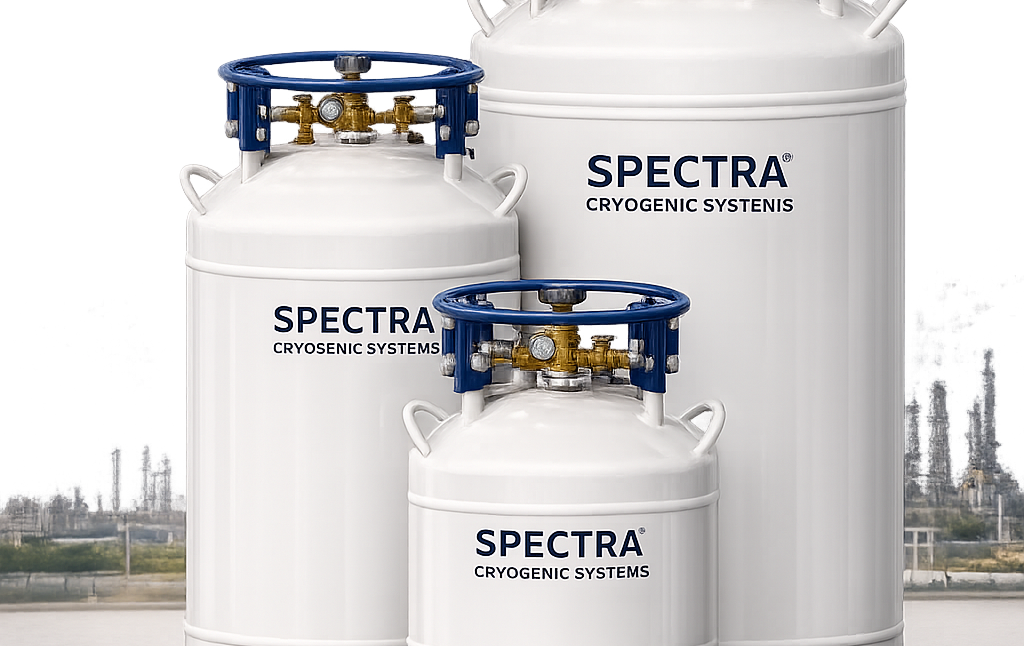
Liquid cylinders are heavy, pressurised vessels that hold a large volume of cryogenic liquid. They are built to be moved, but moving them carelessly is one of the most common ways people get hurt and cylinders get damaged. This guide covers the practical principles of liquid cylinder handling: receiving, moving, positioning and storing liquid cylinders safely on site.
It is general guidance. Always follow the manufacturer’s instructions for your cylinder, your organisation’s procedures and any regulations that apply to your site.
Why Liquid Cylinders Need Particular Care
A liquid cylinder is different from an open-neck liquid nitrogen container in several ways that matter for handling:
- Weight: a filled liquid cylinder is very heavy. Even a small slope or uneven floor can make it hard to control.
- Height and balance: cylinders are tall and can tip if pushed at the wrong point or moved too quickly.
- Pressure: liquid cylinders are closed, pressurised vessels with valves, gauges and pressure-relief devices that must be protected.
- Cryogenic contents: any leak or venting releases very cold liquid or gas.
If you are still deciding between formats, read Liquid Nitrogen Container vs Liquid Cylinder.
Receiving a Delivery
- Plan where the cylinder will go before it arrives, and make sure the route is clear.
- Inspect the cylinder for visible damage, frost patches on the outer body, or damaged valves and gauges.
- Do not accept or use a cylinder that appears damaged until it has been checked.
- Make sure labels and markings are readable, so everyone knows what the cylinder contains.
Moving a Liquid Cylinder
- Use the right equipment. Move cylinders on their built-in casters or wheeled base where fitted, or on a suitable cylinder trolley. Never roll a liquid cylinder on its edge.
- Keep it upright. Liquid cylinders must always stay vertical.
- Push, don’t pull. Push from the handling ring or handles, not from valves, gauges or pipework.
- Move slowly. Take extra care at thresholds, ramps and changes in floor surface.
- Use two people where needed. On slopes, tight corners or uneven ground, have a second person help guide the cylinder.
- Never lift by hand. Liquid cylinders are far too heavy to lift manually.
Lifts and Vehicles
A liquid cylinder in a lift or a closed vehicle is a particular risk: if it vents or leaks, the gas has nowhere to go and oxygen levels can fall quickly. Many organisations require that cryogenic liquids travel in lifts without passengers. For vehicles, use a ventilated load area separated from people, and secure the cylinder upright so it cannot move. Check which transport rules apply to your situation.
Our article Oxygen Depletion Risk When Using LN2 Indoors explains why ventilation matters.
Positioning and Storage
- Store cylinders upright on a level, stable floor, in a well-ventilated area.
- Keep them away from heat sources and out of direct sunlight.
- Do not store cylinders in small enclosed rooms, cupboards or basements without suitable ventilation.
- Leave access around each cylinder so valves and gauges can be reached safely.
- Prevent cylinders from being knocked by trolleys, forklifts or other equipment.
The Cryogenic Storage Area Safety Checklist covers storage rooms in more detail.
Protect Valves, Gauges and Relief Devices
Liquid cylinders have pressure-relief devices that allow gas to escape if pressure builds up. Venting can be normal, especially when a cylinder is not being used. Never tamper with, block or adjust relief devices, and never try to stop a cylinder from venting. If a cylinder vents more than usual, frosts heavily on the outer body or shows a damaged valve, keep people away, ventilate the area and get it checked.
PPE for Handling
Wear protective footwear when moving heavy cylinders. When connecting, disconnecting or withdrawing liquid, add cryogenic gloves and a face shield over safety goggles. Our guide What PPE Is Needed When Handling Liquid Nitrogen? covers PPE by task, and Spectra supplies cryogenic safety equipment.
Common Handling Mistakes
- Pulling a cylinder by its valves or pipework.
- Rolling a cylinder on its edge.
- Moving a cylinder alone on a slope or uneven surface.
- Riding in a lift with a liquid cylinder.
- Storing cylinders in small, unventilated rooms.
- Ignoring heavy frost or unusual venting.
Frequently Asked Questions
Can a liquid cylinder be laid on its side?
No. Liquid cylinders must always be kept upright.
Is it normal for a liquid cylinder to vent gas?
Some venting through the pressure-relief device can be normal. Heavy or continuous venting, or frost on the outer body, should be checked.
What sizes of liquid cylinder does Spectra supply?
Spectra supplies liquid cylinders from 180 L to 240 L as a distributor.
Can damaged cryogenic vessels be repaired?
Spectra repairs cryogenic tanks and containers of all brands, at its workshop or on site. Contact us to discuss your equipment.
Talk to Us About Liquid Cylinders
Spectra Cryogenic Systems Pvt. Ltd., Kota, Rajasthan, supplies liquid cylinders, liquid nitrogen and cryogenic safety equipment. Call +91 98290 89936 or email spectracryo@yahoo.com.