Most liquid nitrogen spills are small: a splash during filling, a container knocked over, a leak from a connection. Even a small spill can cause cold burns, and a large spill in an enclosed room can quickly make the air unsafe to breathe. Knowing what to do before it happens is what keeps a spill from becoming a serious incident. This guide sets out general principles for liquid nitrogen spill response.
It is general safety information. Every site should have its own emergency procedure, based on its own risk assessment, and staff should be trained in it.
Why Spills Are Hazardous
- Cold burns: liquid nitrogen is at about −196 °C. Contact with the liquid, cold vapour or cooled surfaces can injure skin and eyes.
- Oxygen depletion: one litre of liquid nitrogen produces a large volume of nitrogen gas as it evaporates. In an enclosed or poorly ventilated space, this can reduce oxygen to a dangerous level without any warning smell or colour.
- Damage to materials: extreme cold can make some floor coverings, plastics and other materials brittle.
- Poor visibility: the cold vapour cloud can hide the floor and obstacles.
Read more in Oxygen Depletion Risk When Using LN2 Indoors.
Immediate Response Principles
- Stop and step back. Move away from the spill and the vapour cloud. Do not try to wipe up or contain liquid nitrogen.
- Warn others. Tell people nearby and keep them away from the area.
- Judge the size and the space. A small spill in a large, well-ventilated area usually evaporates quickly. A larger spill, or any spill in a small or enclosed room, is more serious.
- If in doubt, leave. For a large spill or any spill in an enclosed space, evacuate the area and raise the alarm following your site procedure.
- Ventilate if it is safe to do so. Open doors or windows on your way out only if it does not put you at risk.
- Do not re-enter an enclosed area until it has been confirmed safe, for example by oxygen monitoring where your site uses it.
- Never enter to rescue someone without proper procedures. Rescuers entering an oxygen-depleted room can be overcome themselves. Raise the alarm and follow your emergency plan.
If Someone Is Injured
Follow your site’s first-aid procedure and seek medical attention for any cold burn or eye exposure. Do not rub the affected area or apply direct heat. Our article Cold Burns from LN2: Prevention and First Response covers this in more detail.
After the Spill
- Let the liquid nitrogen evaporate completely before the area is used again.
- Check equipment, containers and connections involved for damage.
- Check the floor and nearby materials for cold damage.
- Record what happened and review how it could be prevented.
Preventing Spills
- Fill and transfer carefully. Fill slowly and use equipment designed for cryogenic liquids. See Safe Filling and Transfer of Liquid Nitrogen.
- Keep containers upright and stable. Store them where they cannot be knocked over.
- Move vessels carefully. Use trolleys or handles designed for the purpose.
- Inspect vessels and connections. Look for damage, frost on outer bodies and worn hoses.
- Choose the right room. Use and store liquid nitrogen in well-ventilated areas.
Be Prepared
Good preparation makes the right response automatic:
- a written spill and emergency procedure for areas where liquid nitrogen is used;
- training for everyone who works in those areas, including occasional users;
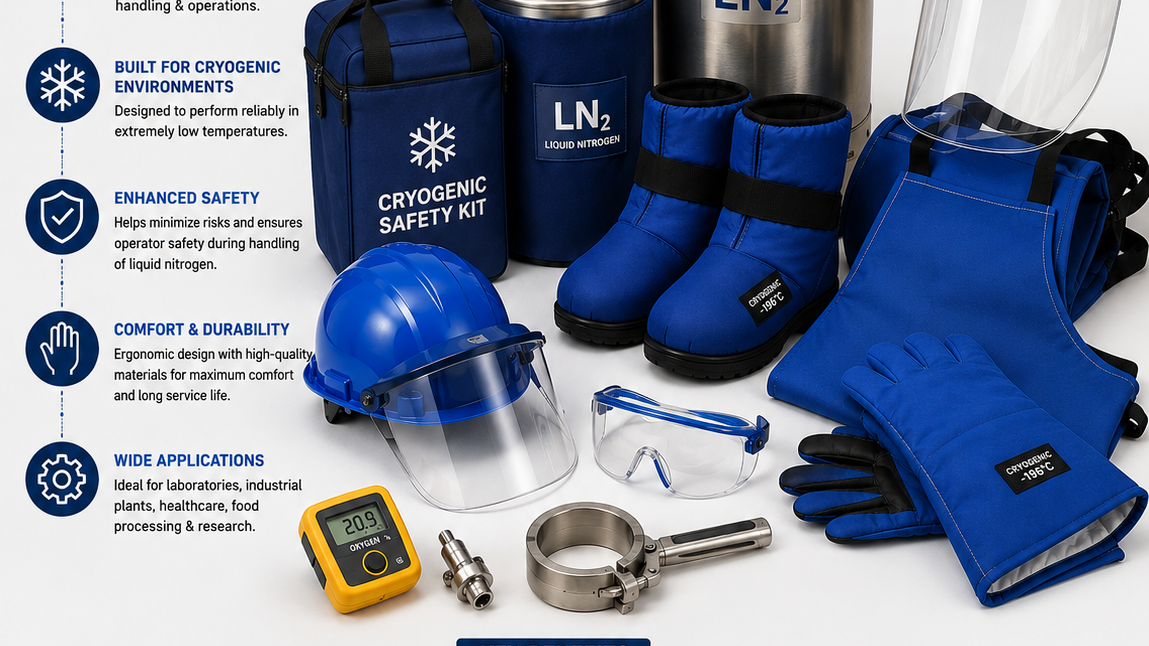
- suitable PPE kept close to where liquid nitrogen is handled, such as cryogenic gloves, face shields, safety goggles and aprons;
- a ventilation assessment and, where appropriate, oxygen monitoring;
- clear signage at the entrance to storage and use areas.
The Cryogenic Storage Area Safety Checklist can help you review your storage area.
Frequently Asked Questions
Should I mop up a liquid nitrogen spill?
No. Keep clear and let it evaporate. Trying to wipe or contain it risks cold burns.
Is a small spill dangerous?
A small spill in a large, well-ventilated space usually evaporates quickly, but it can still cause cold burns. Any spill in a small or enclosed room should be treated seriously because of the oxygen-depletion risk.
Why can’t I smell the danger?
Nitrogen gas is colourless and odourless, so a drop in oxygen gives no warning by smell.
What PPE should be available?
Cryogenic gloves, a face shield worn over safety goggles, and an apron are typical for handling liquid nitrogen.
Cryogenic Safety Equipment from Spectra
Spectra Cryogenic Systems Pvt. Ltd. supplies cryogenic safety equipment, including cryogenic gloves, face shields, safety goggles, aprons, protective clothing and other PPE and accessories. Call +91 98290 89936 or email spectracryo@yahoo.com.