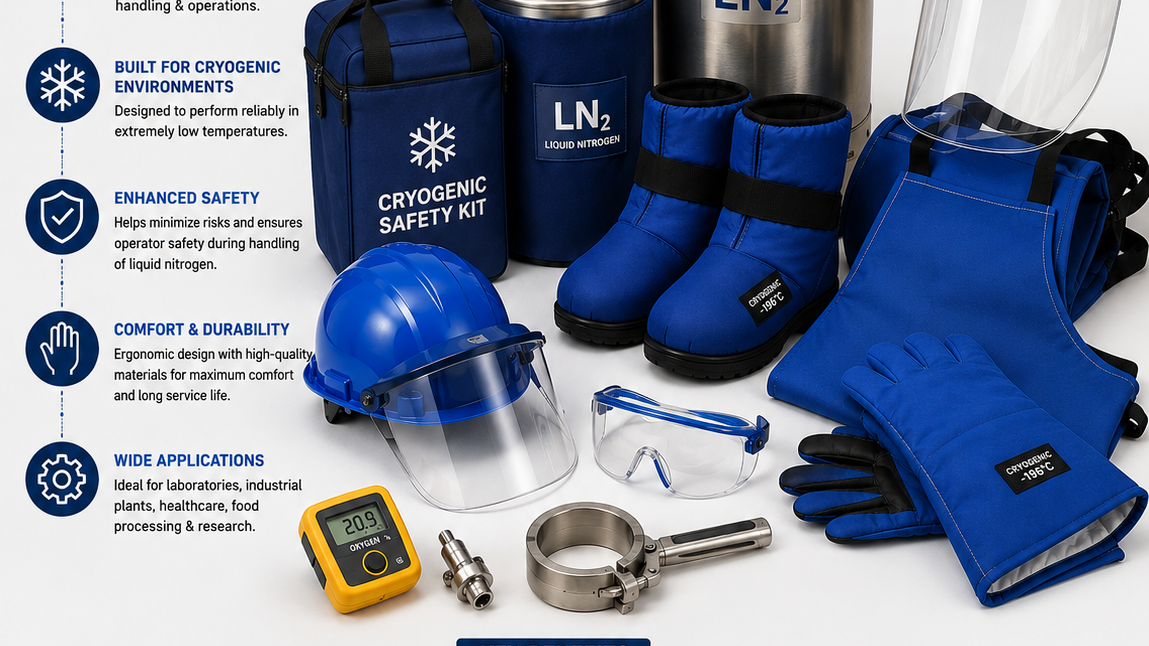
Most liquid nitrogen incidents are not caused by the liquid itself but by where and how it is stored. A container kept in a small, unventilated room, a blocked exit, missing PPE or a damaged vessel nobody reported can turn routine work into an emergency. This cryogenic storage area safety checklist covers the points to review for any area where liquid nitrogen containers, liquid cylinders or other cryogenic vessels are stored and filled.
Use it as a starting point for your own inspections. Your site’s risk assessment, local regulations and the instructions supplied with your equipment always take priority.
Why the Storage Area Matters
Liquid nitrogen boils at about −196 °C and is always slowly evaporating. When it turns to gas it expands to roughly 700 times its liquid volume. In an open, well-ventilated space that gas disperses harmlessly. In a small or enclosed room it can displace oxygen, and because nitrogen has no colour or smell, people may not notice until they are affected. Good storage-area design is the main defence against this hazard.
1. Location and Ventilation
- ☐ Cryogenic vessels are stored in a well-ventilated area, preferably with ventilation to the outside.
- ☐ Vessels are not stored in small closed rooms, cupboards, basements, pits or other places where gas can collect.
- ☐ Ventilation openings and extract systems are working and not blocked.
- ☐ The area is dry, protected from direct sun and away from heat sources.
- ☐ Vessels are not stored in corridors, stairways or near exits where a spill would block escape.
2. Oxygen Monitoring
- ☐ For indoor areas where significant quantities of liquid nitrogen are stored or filled, the need for an oxygen monitor with an audible and visual alarm has been assessed.
- ☐ Where a monitor is installed, it is tested and maintained as specified by its supplier.
- ☐ Staff know what the alarm means and what to do when it sounds.
3. Signs and Information
- ☐ Warning signs at the entrance identify cryogenic liquids and the risk of oxygen depletion.
- ☐ Signs show the PPE required in the area.
- ☐ Emergency contact numbers and the emergency procedure are displayed.
4. Storing the Vessels
- ☐ All vessels are designed for cryogenic liquids and are used only for the liquid they are intended for.
- ☐ Containers and cylinders stand upright on a level, stable floor and are protected from being knocked over.
- ☐ Container lids are the correct loose-fitting type. No vessel is sealed in a way that would trap evaporating gas.
- ☐ Pressure-relief devices on liquid cylinders are not blocked, covered or tampered with.
- ☐ Each vessel is labelled with its contents.
- ☐ Sample containers have a record of what is stored inside, so they are not opened unnecessarily.
5. Filling and Transfer Area
- ☐ Filling and decanting take place in a ventilated area, never in a closed room or vehicle.
- ☐ Transfer hoses, fittings and funnels are suitable for cryogenic use and in good condition.
- ☐ There is enough space to work without reaching over vessels or working in awkward positions.
- ☐ Tongs and suitable tools are available for lifting items in and out of liquid nitrogen.
- ☐ The floor is suitable for occasional cryogenic spills and kept clear of clutter.
6. PPE at the Point of Use
- ☐ Cryogenic gloves, safety goggles and face shields are available at the storage and filling area.
- ☐ Cryogenic aprons are available for pouring and filling tasks.
- ☐ PPE is inspected regularly and damaged items are replaced.
- ☐ Staff wear closed shoes and full-length clothing.
For a task-by-task guide, see What PPE Is Needed When Handling Liquid Nitrogen?
7. Training and Procedures
- ☐ Everyone who handles liquid nitrogen has been trained in its hazards, safe handling and emergency response.
- ☐ Written procedures exist for filling, transferring, moving and receiving deliveries.
- ☐ Lone working with liquid nitrogen has been assessed and controlled.
- ☐ Visitors and contractors are made aware of the hazards before entering the area.
8. Inspection and Maintenance
- ☐ Vessels are checked regularly for dents, damage, frost or condensation on the outer body.
- ☐ Liquid nitrogen levels are recorded, and unusually fast losses are investigated.
- ☐ Damaged or poorly performing vessels are taken out of critical service and inspected. Spectra provides cryogenic tank and container repair for equipment of all brands.
9. Emergency Preparedness
- ☐ Staff know to leave the area and raise the alarm if they suspect oxygen depletion or a large spill.
- ☐ Staff know not to enter an area where oxygen depletion is suspected to rescue someone unless they are trained and the area has been made safe.
- ☐ First-aid arrangements for cold burns are in place, and staff know to seek medical help.
- ☐ Exits from the storage area are clear and clearly marked.
How Often Should You Use This Checklist?
Review the storage area when it is first set up, after any change in layout or quantities stored, and at regular intervals as part of your site inspections. Record what you find and follow up on any items that are not ticked.
Frequently Asked Questions
Can liquid nitrogen be stored in a closed room?
Liquid nitrogen should be stored in a well-ventilated area. Small, closed rooms are unsuitable because evaporating nitrogen can reduce oxygen levels.
Do I need an oxygen monitor?
It depends on the quantity of liquid nitrogen, the size of the room and its ventilation. For indoor areas with significant quantities, an oxygen monitor with an alarm should be considered as part of your risk assessment.
What PPE should be kept in the storage area?
Cryogenic gloves, safety goggles, face shields and cryogenic aprons should be available at the point of use.
What should I do if a container is frosting on the outside?
Frost or condensation on the outer body can indicate a problem with the vacuum insulation. Move critical samples to a sound container if needed and have the container inspected.
Cryogenic Safety Equipment from Spectra
Spectra Cryogenic Systems Pvt. Ltd. supplies cryogenic safety equipment, including cryogenic gloves, face shields, safety goggles, aprons, protective clothing, other cryogenic PPE and safety accessories. To equip your storage area, call +91 98290 89936 or email spectracryo@yahoo.com.