
Cryopreservation makes it possible to store living cells, tissues and other biological material for long periods and use them later. It underpins animal breeding programmes, fertility treatment, biobanks and a great deal of laboratory research. This article explains what cryopreservation is, how it works in general terms, where liquid nitrogen fits in, and what matters when storing material long term.
What Is Cryopreservation?
Cryopreservation is the preservation of biological material by cooling it to very low temperatures. At these temperatures, the biological and chemical activity that would normally cause the material to deteriorate slows to a near standstill. Material that would survive only hours or days at room temperature can be kept for much longer and then used when needed.
Liquid nitrogen, which boils at about −196 °C, is the most widely used medium for keeping cryopreserved material cold. For background, see What Is Liquid Nitrogen?
What Is Cryopreserved?
- Semen: frozen semen straws for artificial insemination in animal breeding. See The Role of Liquid Nitrogen Containers in Frozen Semen Preservation.
- IVF and fertility material: sperm, eggs and embryos stored in fertility treatment.
- Cells and cell lines: used in research, testing and biotechnology.
- Tissues and other biological samples: stored in laboratories, biobanks and research facilities.
- Veterinary material: biological material used in veterinary work.
How Cryopreservation Works, in Outline
The detailed methods depend on the type of material and are set by the protocols of the lab or clinic. In general terms, the process involves:
- Preparation: the material is prepared and often mixed with a protective solution, sometimes called a cryoprotectant, which helps reduce damage during freezing.
- Cooling: the material is cooled in a controlled way. How fast it is cooled matters, because ice formation inside cells can damage them.
- Storage: the frozen material is transferred to long-term storage, typically in or above liquid nitrogen.
- Thawing: when needed, the material is warmed using the method set by the protocol.
The specific cooling and thawing steps are a matter for the user’s own validated procedures.
Storage: Where Liquid Nitrogen Comes In
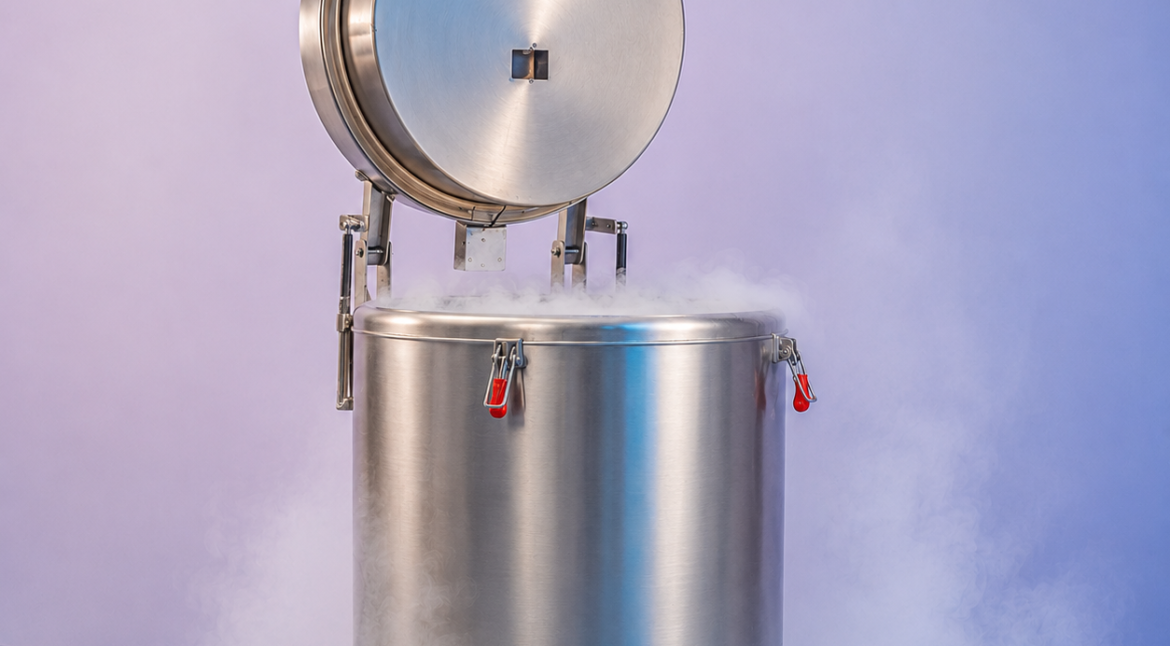
Once material is frozen, it must stay cold continuously. Even short periods of warming can harm it. That is why long-term storage relies on vessels that can maintain cryogenic temperatures for weeks at a time:
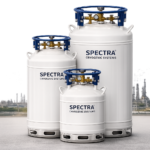
- Liquid nitrogen containers hold samples in canisters or racks, with liquid nitrogen keeping them cold. Spectra’s containers range from 1 L to 51 L, with holding times typically between 15 and 60 days, depending on the model.
- Biological sample storage chambers are larger storage systems for organising and accessing many samples.
Samples can be stored in the liquid itself or in the cold vapour above it. Our guide Vapour Phase vs Liquid Phase Storage in Liquid Nitrogen explains the difference.
What Matters for Long-Term Storage
- Keep levels topped up. Check liquid nitrogen levels on a schedule and refill well before they run low.
- Plan supply. A reliable liquid nitrogen supply is essential.
- Keep good records. Know exactly where each sample is, so containers are not opened longer than necessary.
- Look after the vessels. Frost on the outer body, or liquid nitrogen running out faster than usual, can indicate damaged vacuum insulation. Have containers inspected and repaired when needed.
- Handle safely. Use cryogenic gloves and eye and face protection, and store vessels in well-ventilated areas.
Cryopreservation vs Ordinary Freezing
A household or laboratory freezer slows deterioration but does not stop it. Cryopreservation uses much lower temperatures, together with careful preparation and controlled cooling, so that biological material can be stored for long periods and remain usable. Ultra-low freezers have their own place in many labs; the choice depends on the material and the user’s protocols.
Frequently Asked Questions
What temperature is used in cryopreservation?
Long-term storage commonly uses liquid nitrogen, which boils at about −196 °C, or the cold vapour above it. The exact conditions depend on the material and the user’s protocol.
Is cryopreservation used in IVF?
Yes. Fertility treatment commonly uses cryopreservation to store sperm, eggs and embryos.
What is used to store cryopreserved semen?
Frozen semen straws are commonly stored in liquid nitrogen containers, especially in animal breeding programmes.
What happens if a container runs out of liquid nitrogen?
The stored material can warm and may be damaged. This is why regular level checks and a reliable supply are essential.
Storage Containers and Liquid Nitrogen from One Supplier
Spectra Cryogenic Systems Pvt. Ltd., Kota, Rajasthan, supplies liquid nitrogen containers for semen preservation, IVF, laboratories, biological samples and veterinary use, together with liquid nitrogen supply and container repair. Call +91 98290 89936 or email spectracryo@yahoo.com.